Stargazing in the Arizona Desert Near Scottsdale
The best stargazing near Scottsdale: dark-sky spots like Fountain Hills, Bartlett Lake, and the Tonto National Forest, plus when to go and what to bring.
Once the sun drops behind the saguaros, the Sonoran Desert puts on a second show. Arizona has dry air, clear skies and real dark-sky country within an hour of Scottsdale. The catch is the Valley’s light. Here’s where to go stargazing near Scottsdale, when to plan it, and what to bring.
Why the Valley Pushes You East and North
Phoenix, Tempe, Mesa, Chandler and the rest of the metro sit south and west of Scottsdale and throw a dome of glow into the sky. Drive east or north and the towns run out and the mountains start helping: the McDowells shield Fountain Hills from much of the city’s glow, and past them the Tonto National Forest runs for nearly three million acres with no towns in the corner nearest you. Put the McDowells or the Superstitions between you and the city, face away from Phoenix, and the sky does the rest.
The Spots, Closest First
Fountain Hills (about 30 minutes from Old Town)
Fountain Hills has been an International Dark Sky Community since 2018, so the whole town runs shielded, warm-toned lighting, and you notice it the moment you step out of the car. Head out Shea Boulevard, clear the shopping centers, find a quiet park or street on the east side of town, and face east or north with the McDowells at your back. You won’t get the Milky Way at its best, but you’ll see far more than from Scottsdale, and you can be home by ten.
Bush Highway and Saguaro Lake (40 to 45 minutes)
Take Shea east to the Beeline Highway (AZ-87), go north, then turn onto Bush Highway toward Saguaro Lake and into the Tonto National Forest proper. The wide gravel pull-offs along Bush Highway are the move: pick one on a straight stretch, park well off the pavement, kill every light in the car, and give it 20 minutes. Four Peaks sits to the northeast and the Goldfield Mountains to the south, so the darkest horizon is east. The developed recreation sites around the lake post day-use hours and many need a Tonto Pass, bought before you drive out (local stores and gas stations sell them); the pull-offs need neither.
Lost Dutchman State Park (45 minutes to an hour)
At the foot of the Superstition Mountains outside Apache Junction, this is the classic. The cliffs on the east side block everything that way, so face them and the Valley is behind you. There’s a day-use fee and day use ends in the evening, so check the hours, or reserve a campsite for the whole night, including the pre-dawn hours when the Milky Way core rises in spring. Our Superstition Mountains and Apache Trail guide covers the daylight side.
Bartlett Lake (about an hour)
Up the Cave Creek side: Cave Creek Road north, then Bartlett Dam Road, paved all the way to the lake. Bartlett is a reservoir on the Verde River deep in the Tonto, the darkest of the easy options because there’s nothing but forest for miles around. Rattlesnake Cove is the straightforward day-use site (Tonto Pass again), and the drive back down is dark and winding, so take it slow.
The Apache Trail Overlooks (an hour and change)
State Route 88 climbs past Lost Dutchman; the paved stretch to Canyon Lake and Tortilla Flat is open (the road beyond has been closed since storm damage in 2019). The pull-offs above Canyon Lake put a wall of Superstition ridgeline between you and the city. The road is narrow, twisty and unlit, with one-lane bridges at the lake: drive it in daylight, pick your overlook, and stay put through sunset.
The Rules of a Good Night
Timing makes or breaks it:
- Go in new moon week. A bright moon washes out everything faint. The week either side works too: before new moon it doesn’t rise until the small hours, and after it the thin crescent sets early.
- Wait an hour after sunset, then give your eyes 20 minutes in the dark before you judge the sky. Full adaptation takes closer to 30.
- Red light only. One glance at a white phone screen and your 20 minutes start over, so switch your star app to night mode before you leave the car.
- Pick a clear night. Check the forecast for clouds and wind; blowing dust kills contrast.
- Winter skies are the crispest. Cool, dry air, long nights, Orion overhead, and the least sweat.
What’s Up There, Month by Month
The Milky Way core is the thing everyone wants. It’s a pre-dawn object from roughly March and an evening object from late spring through October. June is the sweet spot: pre-monsoon skies are clear and the core is well up in the southeast by 10 pm. By September and October it’s sinking into the southwest at nightfall, toward the Valley glow.
The Perseids peak around August 12 and are best after midnight, radiating from the northeast. The Geminids peak around December 13 and produce from mid-evening, so no all-nighter needed. Dress for near freezing.
Monsoon season is the catch. July and August bring afternoon storms that often linger after dark, plus lightning and dust. Don’t drive out on a stormy evening expecting stars, and never park in a wash; our monsoon season guide has the details.
Safety and Etiquette on Forest Service Land
The Tonto is real wilderness once you leave the pavement:
- Tell someone where you’re going and when you’ll be back. Cell signal is patchy along Bush Highway and around both lakes.
- Fill the tank in Fountain Hills or Mesa. There’s no gas on Bush Highway or Bartlett Dam Road.
- No fires outside a designated site, and none at all under seasonal restrictions, common from late spring into summer.
- Pack out everything, orange peels included.
- Watch the road. Salt River wild horses cross Bush Highway at night, along with mule deer, javelina and open-range cattle. Drive under the limit.
- Mind your feet. Rattlesnakes and scorpions are out on warm nights, so wear closed-toe shoes and shake out the blanket before you fold it.
- Kill the lights for everyone else, too; headlights ruin the night for the car 200 yards down the road.
What to Bring
- Reclining chairs or a blanket, so you look up instead of craning.
- Layers, even in summer. The desert sheds heat fast a few hours after sunset, and the forest runs cooler than the city. Winter nights need a coat, a hat and a sleeping bag.
- Water and snacks, more water than you think.
- A red headlamp, or a flashlight with red tape over the lens.
- A star app with a night mode.
- Binoculars if you have them; they turn the Milky Way into individual stars. A telescope is a bonus.
Pair It With a Sunset Ride
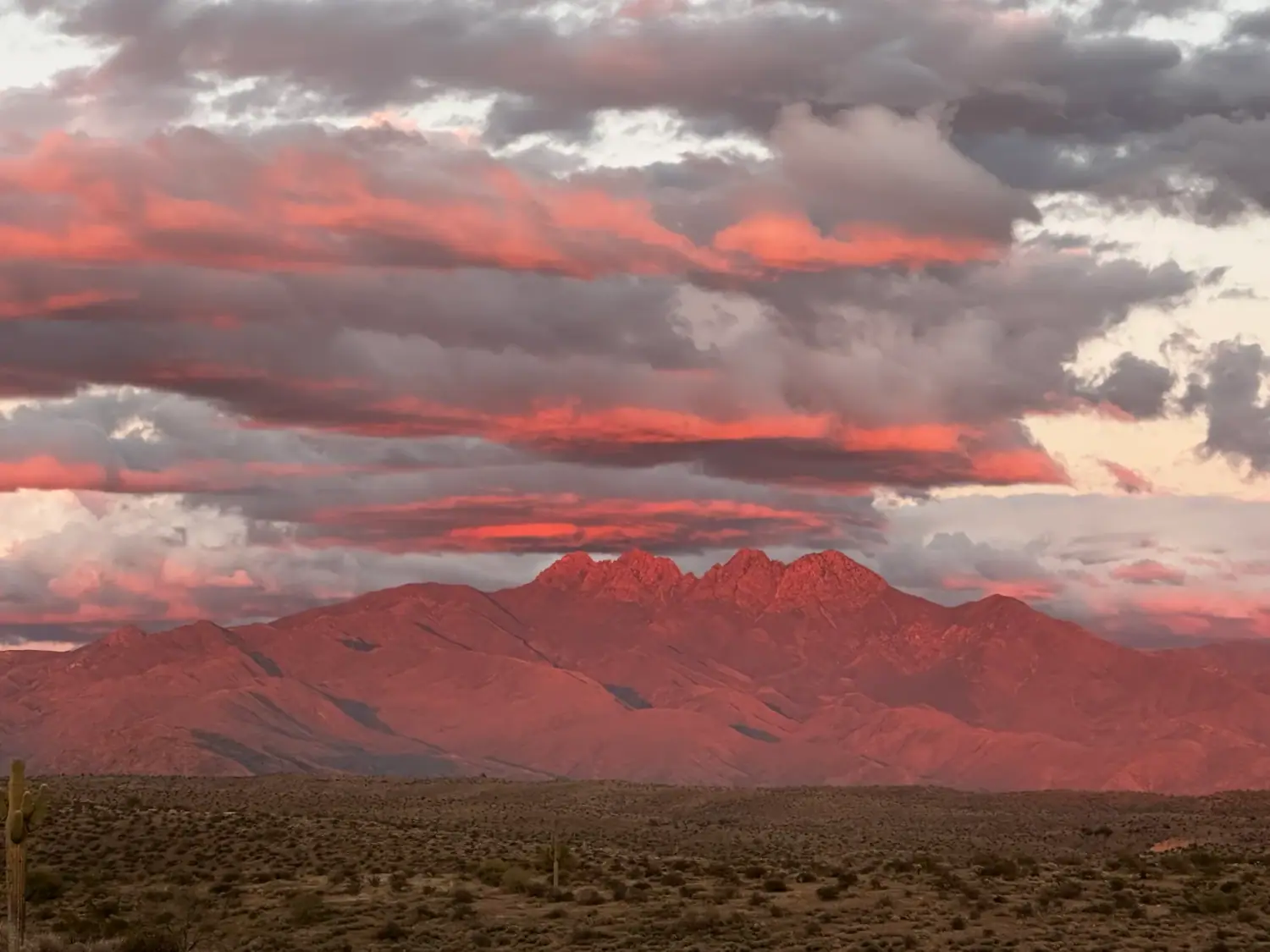
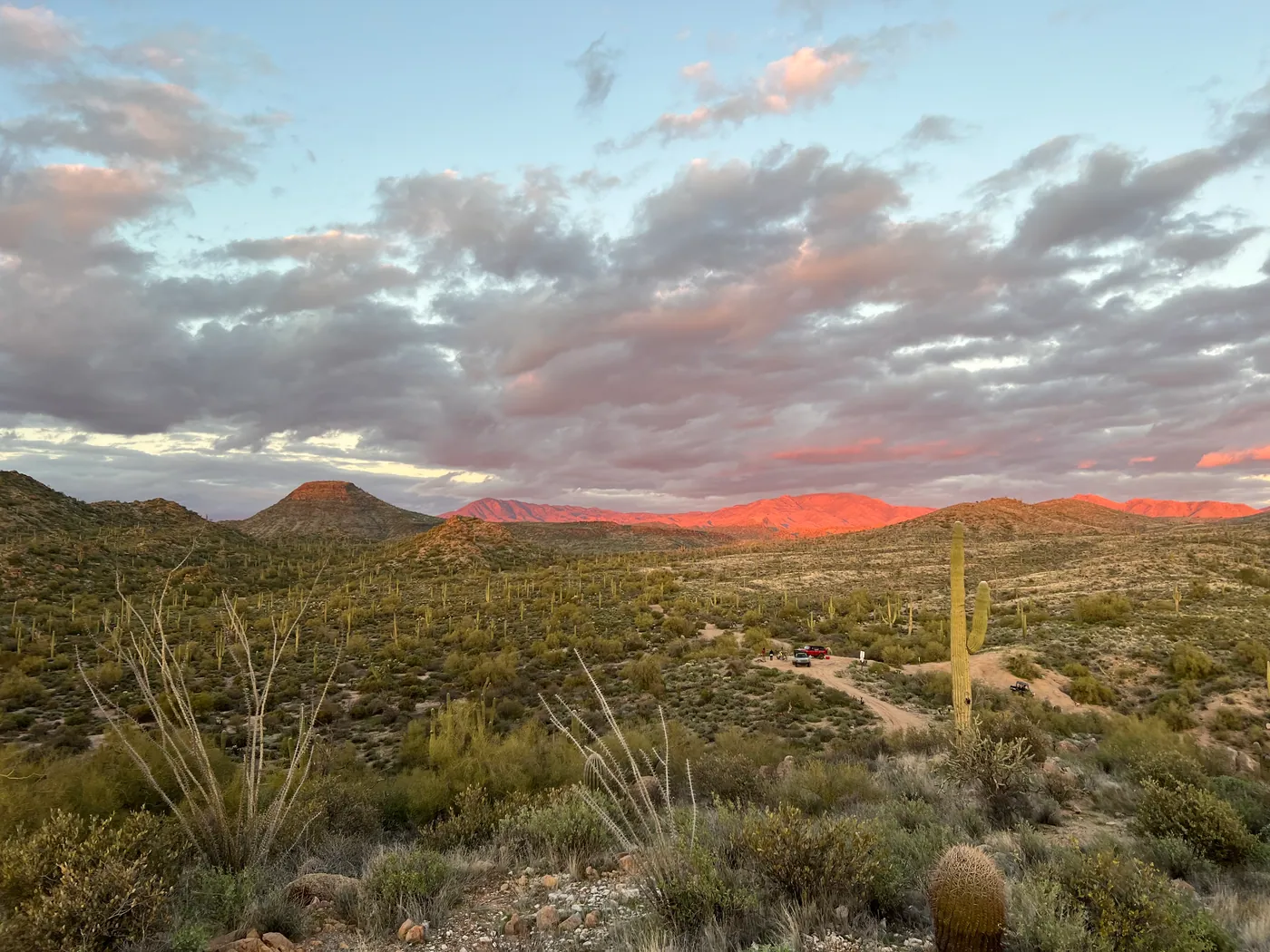
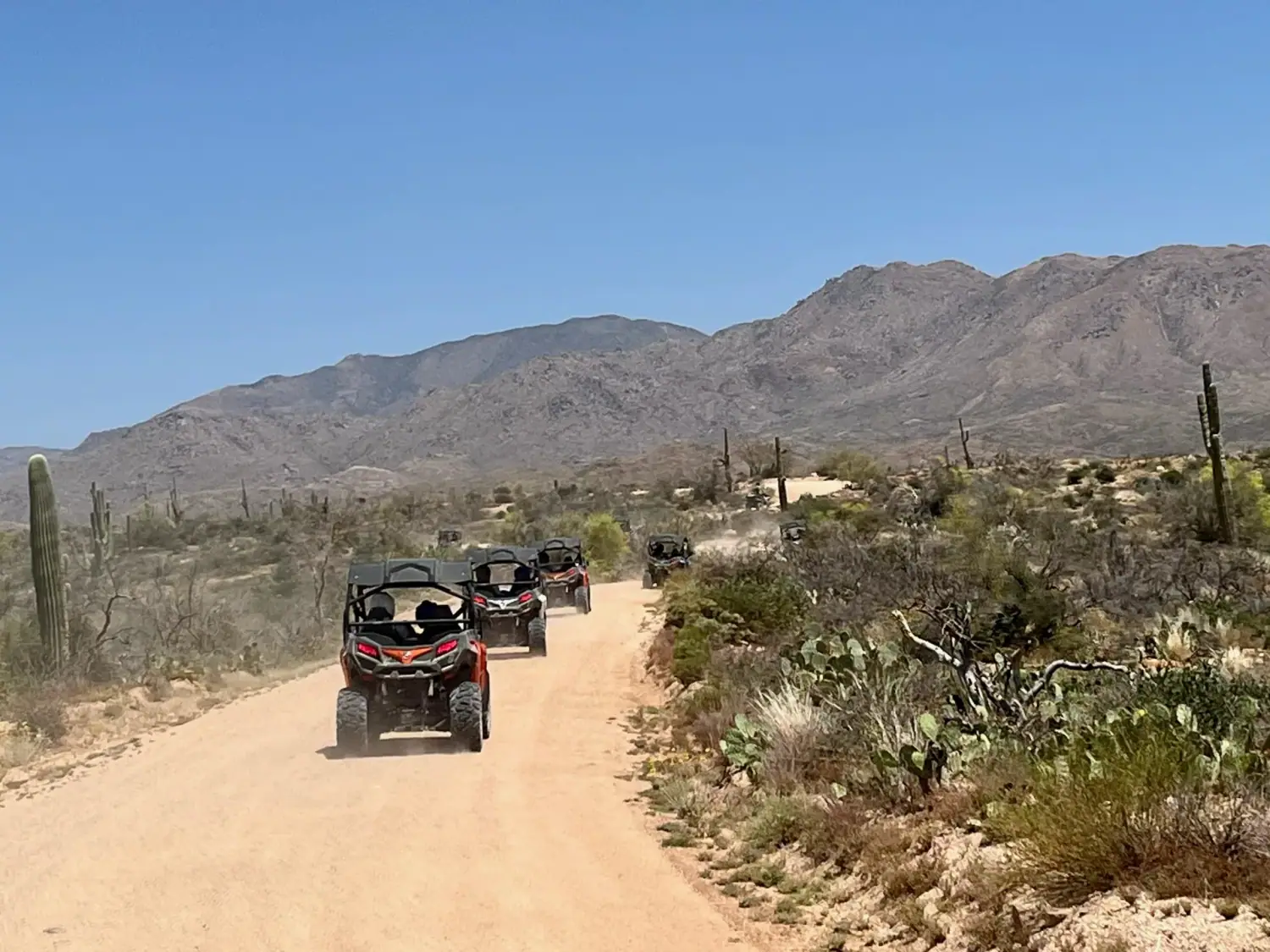
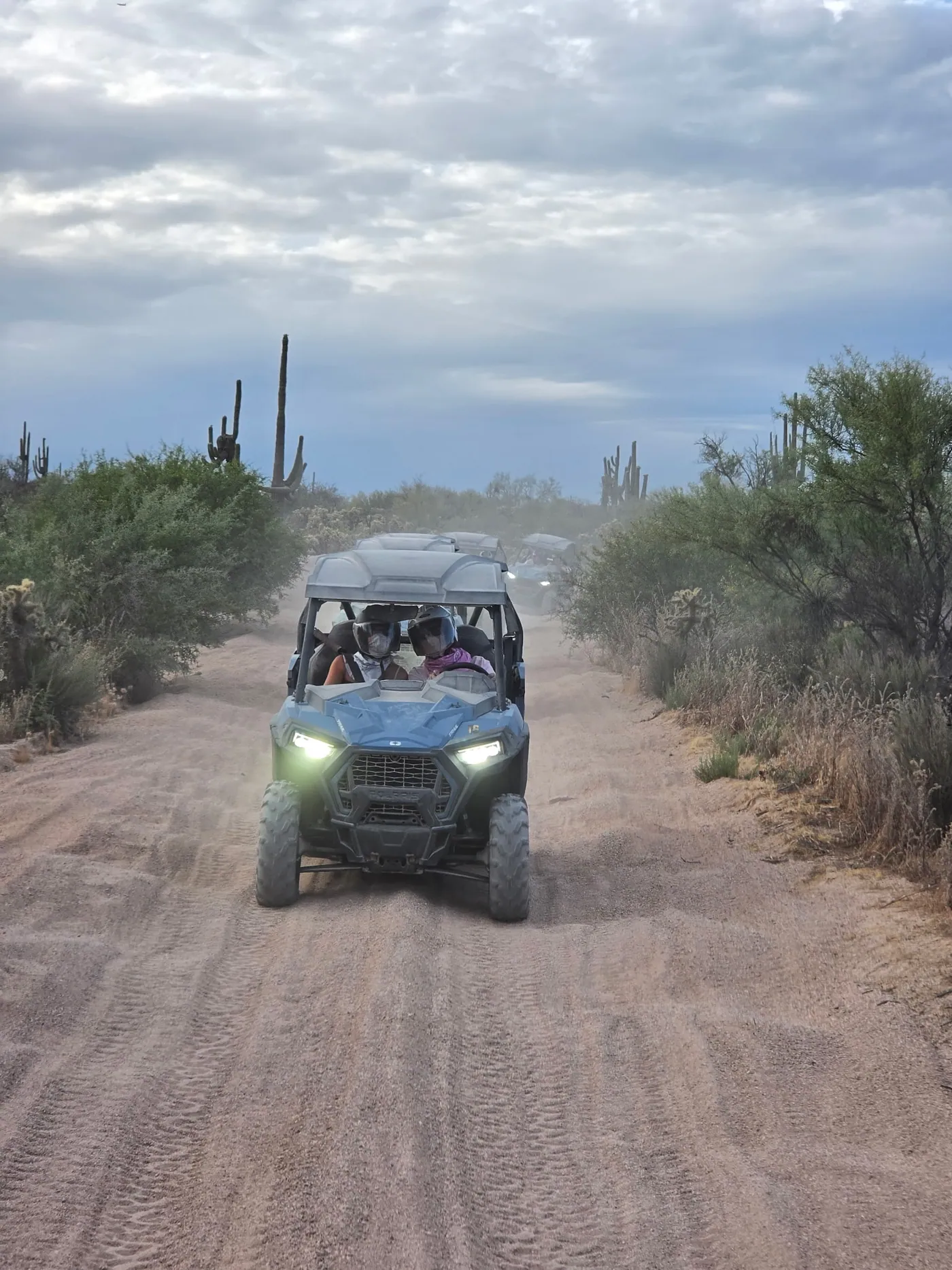
The best desert nights start at golden hour. Our sunset U-Drive tour runs toward golden hour with views of Four Peaks and ends around dusk at the Butcher Jones OHV Staging Area past Saguaro Lake, in the same dark corner of the Tonto. You drive your own 2-seat sand buggy behind a guide, finish as the sky shifts from fire to deep blue, and the stars come out on your drive home along Bush Highway. Pull into a gravel pull-off, switch the car off, and give it 20 minutes. The ride ends at dusk, so the stargazing is your own, and it’s free.
Book it for new moon week and you’ve built the whole evening. The staging area is 45 minutes from central Scottsdale and Old Town and 15 from our Fountain Hills office (maps and directions). Couples, this is the date night; our guide to romantic desert tours has the rest. More evening ideas: our 7 best Scottsdale sunset spots.
Look Up
Stargazing is the desert’s quietest thrill: free, unforgettable, and a short drive from Scottsdale. Pick a spot from the list, time it with the moon, bundle up, and let the sky do the rest.
Want to build a golden-hour-into-stars evening in the Sonoran Desert? Call Desert Dog Offroad Adventures at (480) 837-3966 or book a sunset desert tour, and we’ll set you up for the best seat in the desert.