Rattlesnakes in Arizona: What to Know Before You Hike or Ride
Rattlesnakes in Arizona: when they're active, how to avoid them on a hike or ride, and exactly what to do if you meet one. Plain-English desert safety.
Rattlesnakes live all over the Arizona desert, and they are most active in spring and fall. You are very unlikely to be bitten if you stay on the trail, watch where you put your hands and feet, and give any snake you meet plenty of room. Here’s what to know before you hike or ride.
Which rattlesnakes live near Scottsdale?
Arizona has more rattlesnake species than any other state, and a few of them are common in the Sonoran Desert around Scottsdale and the Tonto National Forest. The Western diamondback is the big one you’ll hear about most. The black-tailed rattlesnake and the speckled rattlesnake also turn up in the right habitat, which is rocky hillsides, washes, and brush at the base of saguaros.
You don’t need to memorize species. The rules for staying safe are the same for all of them.
When are rattlesnakes active?
Rattlesnakes are cold-blooded, so the temperature runs their schedule.
| Season | What to expect |
|---|---|
| Spring (March to May) | Peak activity. Snakes come out of winter shelter to warm up and hunt, often on trails and roads. |
| Summer (June to August) | Mostly dusk, night and very early morning. Midday ground temperatures are too hot for them. |
| Fall (September to October) | A second active window as temperatures drop. Snakes may sun on warm pavement and dirt. |
| Winter (November to February) | Mostly underground. A warm afternoon can still bring one out. |
If you are hiking in the evening, bring a flashlight and watch the ground in front of you. For more on how the seasons change the desert, see our guide to the best times of year to book an Arizona desert tour.
How to avoid a rattlesnake encounter
Most encounters are avoidable with a few habits:
- Stay on the trail. Snakes rest in brush, under rocks and in the shade of bushes. Walking off-trail is how people surprise them.
- Look before you step or reach. Never put your hands or feet where you can’t see, including ledges, rock piles and woodpiles.
- Wear closed-toe shoes and long pants if you will be in brush. Our what to wear on an Arizona ATV tour guide covers the full outfit.
- Use a light after dark. Many bites happen at night on a path someone thought was clear.
- Keep dogs leashed. Dogs are curious and get bitten far more often than hikers do.
- Give every snake space. A snake on the trail is not a photo opportunity.
What to do if you see a rattlesnake
- Stop moving as soon as you hear a rattle or see the snake.
- Locate it, then back away slowly. Several feet is the minimum. More is better.
- Leave it alone. Don’t poke it, throw things or try to move it. Moving it is how most bites happen.
- Go around it with a wide berth, or turn back and choose a different route.
Not every rattlesnake rattles. A snake may stay silent and rely on its camouflage, which is another reason to watch the ground ahead of you.
What to do after a bite
Bites are rare, but this is the one situation where speed matters.
- Call 911 right away and keep the person calm and as still as possible.
- Get to a hospital quickly. Don’t try to drive a long way on your own if help can come to you.
- Remove rings, watches and tight clothing near the bite before swelling starts.
- Don’t cut the wound, suck out venom, apply ice or use a tourniquet.
This is general safety information, not medical advice. In an emergency, follow the 911 dispatcher’s instructions.
Rattlesnakes and a desert tour
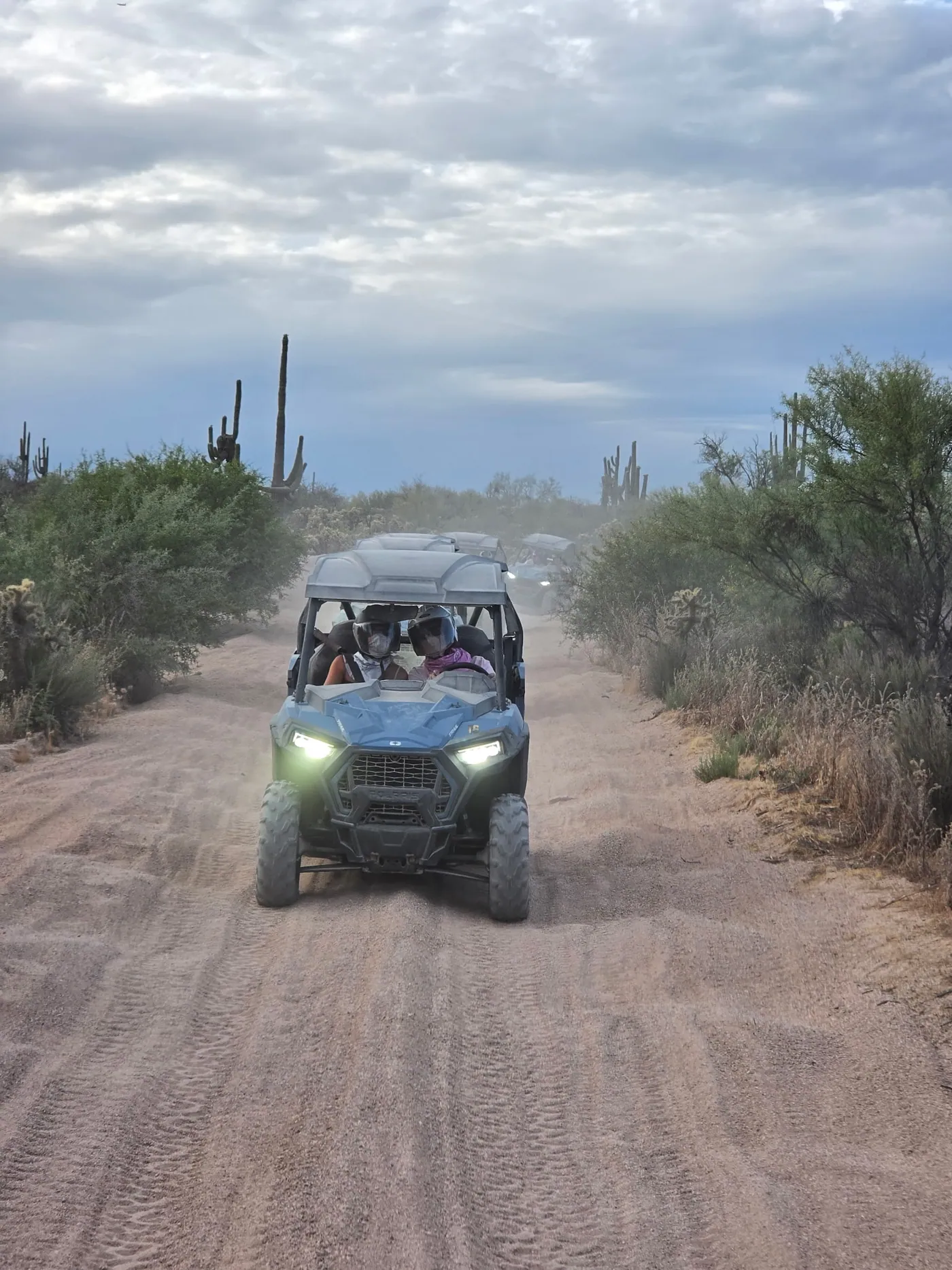
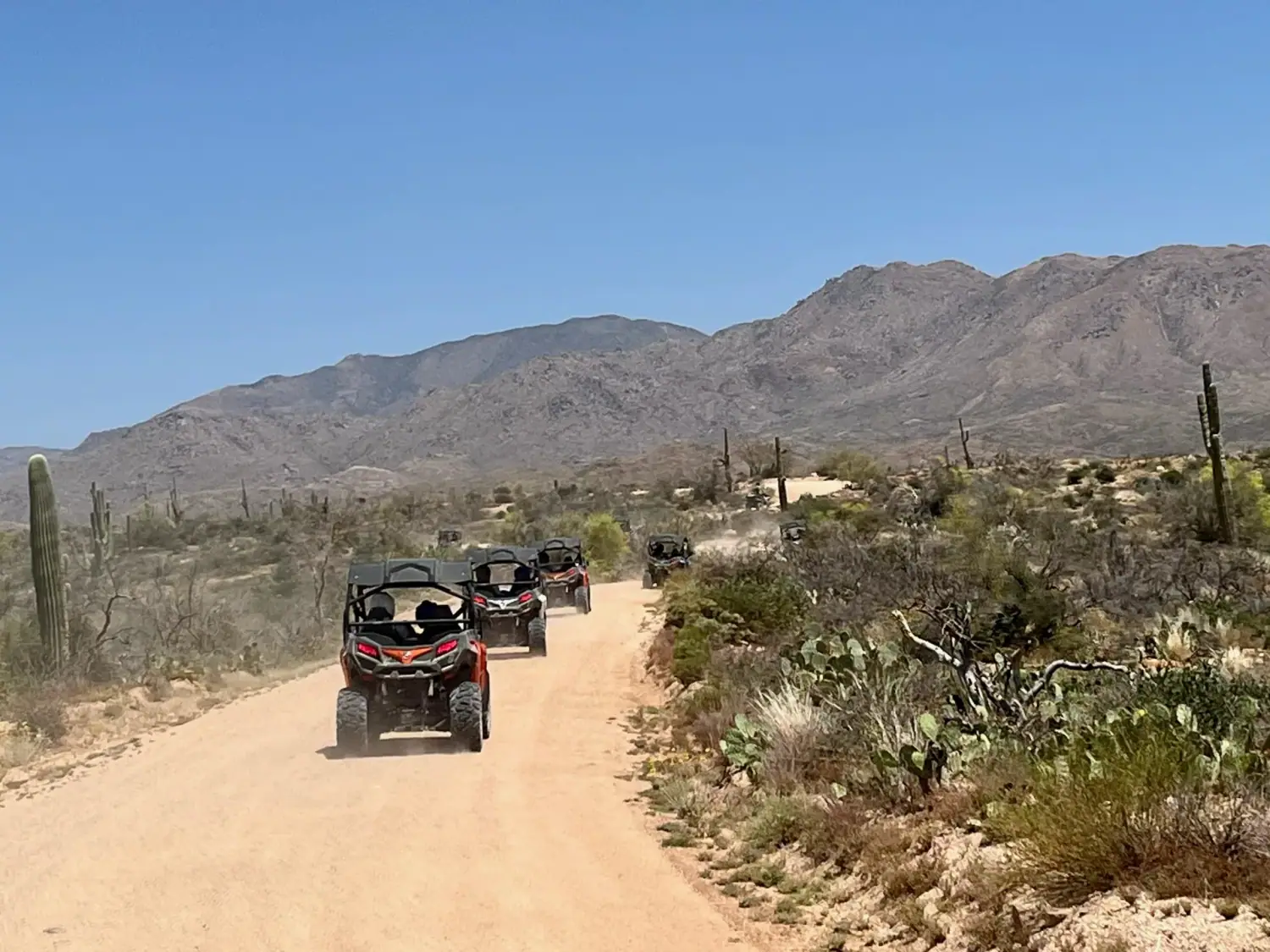
People ask us about snakes often, and the honest answer is that you will probably never see one. Snakes avoid the noise and vibration of engines, and a guided tour sticks to established trails with a guide who knows the terrain. If a snake does show up, you’re sitting in a buggy with a guide leading the way, which is a far better spot than a footpath.
If you want to meet the rest of the Sonoran Desert’s residents, read our roundup of the Sonoran Desert wildlife you’ll see on an Arizona ATV tour and our Gila monster guide. Other safety questions are covered in our frequently asked questions.
See the desert from the driver’s seat
The easiest way to enjoy snake country is with someone who knows it. On a guided Scottsdale ATV tour, you drive your own sand buggy on established trails through the Tonto National Forest, with a CPR-certified guide leading the group and a full safety briefing before you go. Buggies start at $299 each, plus tax and fees, and seat two. Call Desert Dog Offroad Adventures at (480) 837-3966 or book online.