Gila Monster: Arizona's Venomous Desert Lizard
Everything to know about the Gila monster, Arizona's venomous desert lizard: how big they get, whether they are dangerous, and where to spot one near Scottsdale.
Few desert animals turn heads like the Gila monster. With its black-and-orange beaded skin, heavy body, and unhurried walk, it looks like something out of a storybook, and it is one of the most talked-about residents of the Sonoran Desert around Scottsdale. Here is a plain-English guide to what the Gila monster is, whether it is dangerous, how big it gets, and how you might spot one in the wild.
What is a Gila monster?
The Gila monster is a large, slow-moving lizard native to the deserts of the southwestern United States and northern Mexico. It takes its name from the Gila River basin in Arizona. You will know it instantly: no other lizard in the region wears that beaded pattern of black with orange, pink, or salmon, a warning coloration that tells predators to keep away.
It is one of only a small number of venomous lizards on earth, and the largest lizard native to the United States. Despite the dramatic name, it lives a quiet, hidden life, spending the vast majority of its time in burrows and emerging mainly to feed and, in spring, to find a mate.
Are Gila monsters dangerous to humans?
This is the question everyone asks, and the honest answer is reassuring. A Gila monster is venomous, but it is not aggressive and it is not out to get you. It cannot strike like a rattlesnake. It delivers venom by biting and chewing, working the venom in through grooved teeth in its lower jaw, which means a bite requires the animal to be handled or seriously provoked.
Recorded bites are rare, and they almost always happen to someone who picked one up. A bite hurts, but there has not been a confirmed human death from a Gila monster in modern records. The takeaway for anyone out in the desert: never handle one, give it space, and there is nothing to fear.
How big is a Gila monster?
An adult typically measures 14 to 22 inches from nose to tail tip and can weigh up to about 2 pounds. That thick, sausage-shaped tail is a fat reserve. Because the Gila monster eats infrequently, gorging on eggs, nestling birds, and small mammals when it finds them, it can store enough energy to last for weeks or even months between good meals.
Where and when to see a Gila monster
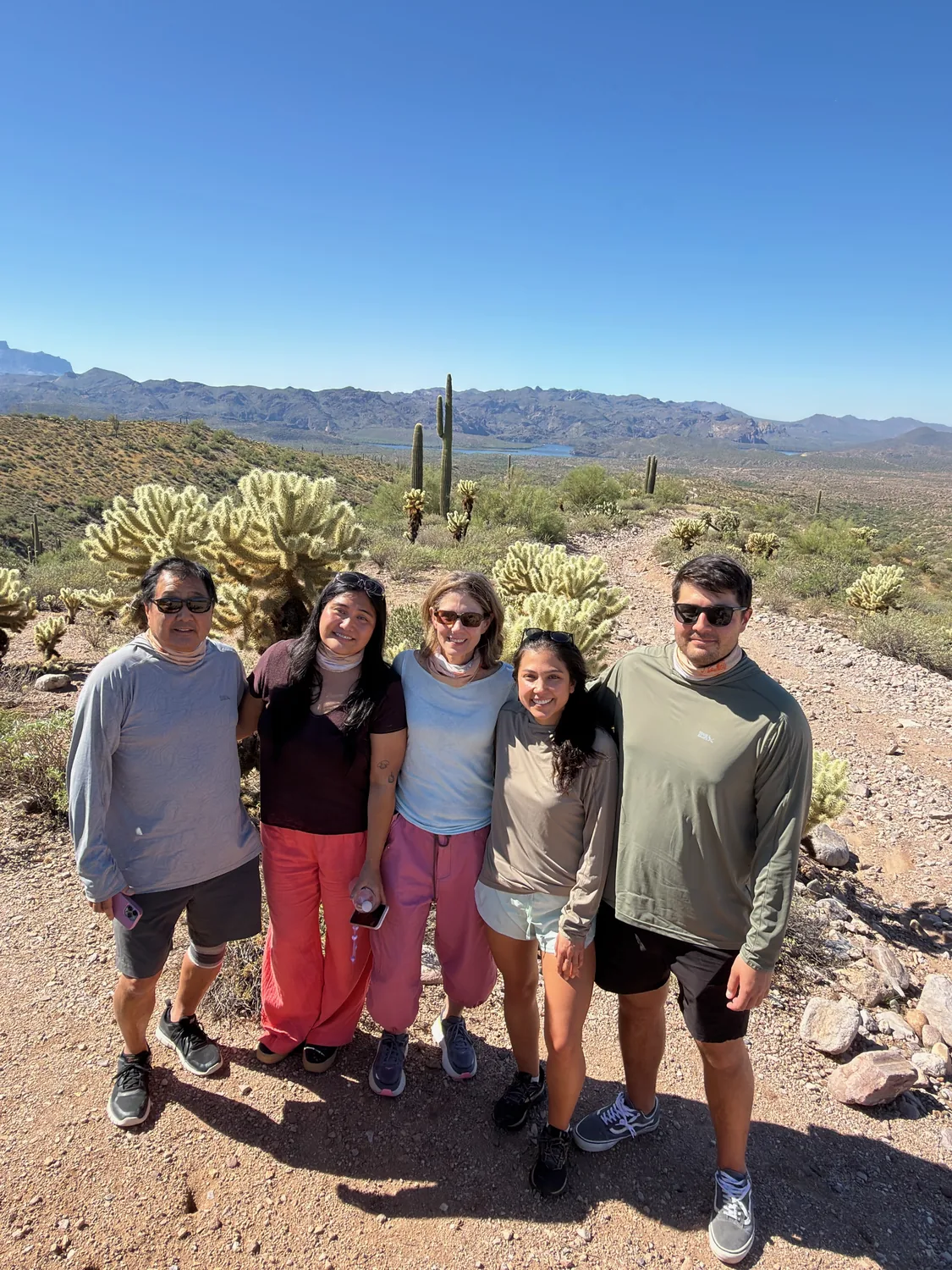
Gila monsters favor rocky slopes, boulder piles, and the edges of desert washes, exactly the kind of terrain that surrounds the trails we ride in the Tonto National Forest outside Scottsdale. They shelter underground through the heat of summer and the cold of winter, so timing matters more than luck.
The prime window is spring mornings, roughly March through May, when temperatures are mild and the animals come out to hunt and roam. After a soaking rain is another good bet. If you are hoping to catch a glimpse, an early guided tour gives you the best odds, and our guides know the habitat where they turn up. To meet the rest of the cast, read our roundup of the Sonoran Desert wildlife you might see on a tour.
Watch responsibly
The Gila monster is protected in Arizona, and for good reason. It reproduces slowly and does not do well when disturbed. If you are lucky enough to see one, keep your distance, skip the urge to move or touch it, and let it go about its day. A photo from a few feet away is the perfect souvenir.
See the Sonoran Desert for yourself
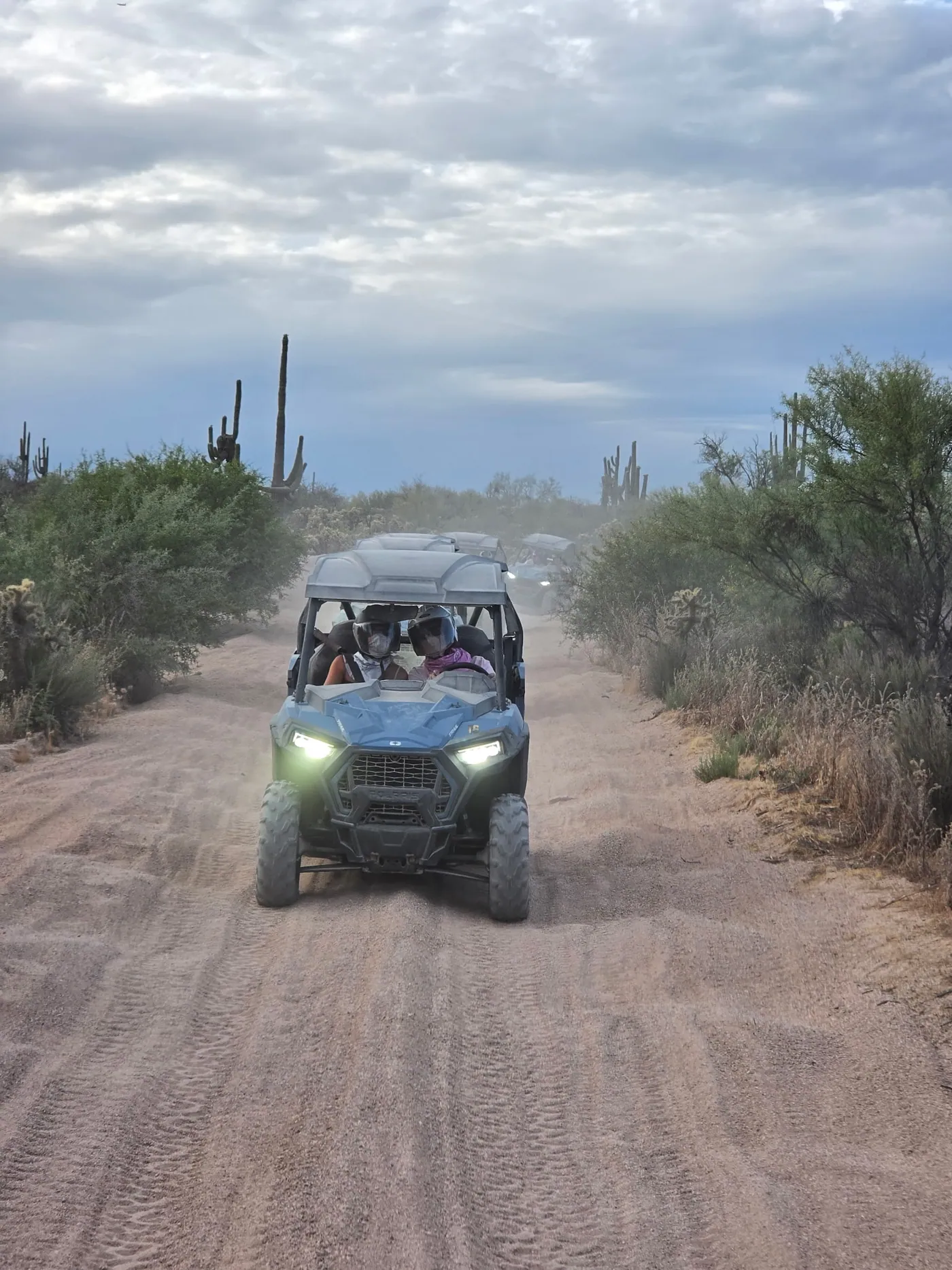
The best way to meet the desert on its own terms is to get out into it. On a guided Scottsdale ATV tour or sunset U-Drive tour, you drive your own sand buggy through the exact rocky, washed, saguaro-dotted country a Gila monster calls home, with an expert guide leading the way and pointing out the wildlife as you go. Morning rides in spring give you the best shot at a sighting, and every tour is a front-row seat to the living Sonoran Desert.