Are ATV & UTV Tours Safe? A First-Timer's Honest Guide
Are ATV and UTV tours safe? What first-timers worry about, answered: guides, gear, roll cages, age rules, and how a guided Scottsdale desert tour keeps you safe.
If you’ve never been off-roading, a bit of nervousness before your first ATV or UTV tour is normal. The straight answer to “are these tours safe?” is yes: a reputable guided tour is built around safety from the moment you park, and most of the risks people picture are handled before you touch the throttle. Here’s how that system works, step by step, so you can book with confidence.
The Briefing: What Happens Before You Move an Inch
Every Desert Dog Offroad Adventures tour starts at the Butcher Jones OHV Staging Area, past Saguaro Lake in the Tonto National Forest, and nobody rolls out until the briefing is done. Your CPR-certified guide runs it in this order.
- The controls. The guide points out the key, the shifter, the wheel, and the two pedals. Throttle on the right, brake on the left, like an automatic car.
- Throttle and brake feel. The throttle is touchier than a car’s, so you learn to feather it. Brakes bite later on loose sand than on pavement, so you learn to brake early and smoothly.
- Seatbelt and helmet check. Belt snug across the hips, helmet strap fastened, goggles on. The guide checks each buggy before the line moves.
- Hand signals and spacing. You can’t hear voices over the engines, so the guide shows you the signals for slow down, stop, and hazard ahead, and you pass each one back down the line. You also get your following distance: far enough back to stay out of the dust of the buggy ahead.
- What to do if you stall or get stuck. Stop, stay belted in, and wait. The guide checks the line constantly and walks back to restart you or talk you out of the soft spot. Don’t spin the wheels in sand; it only digs you deeper.
Ask your questions here. Guides would much rather answer ten in the staging area than one on a hill.
The Machine: Why a Sand Buggy Is the Beginner’s Seat
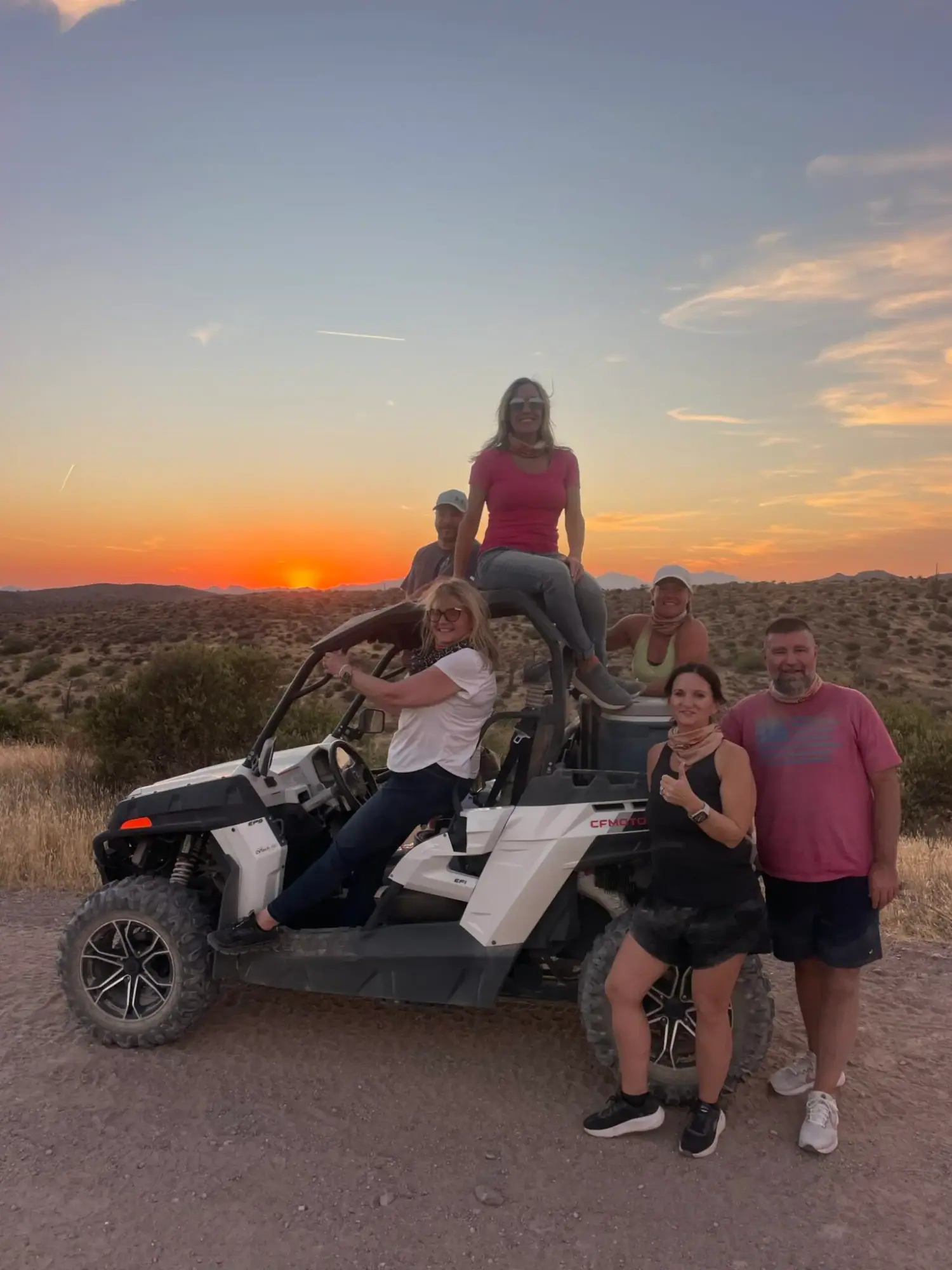
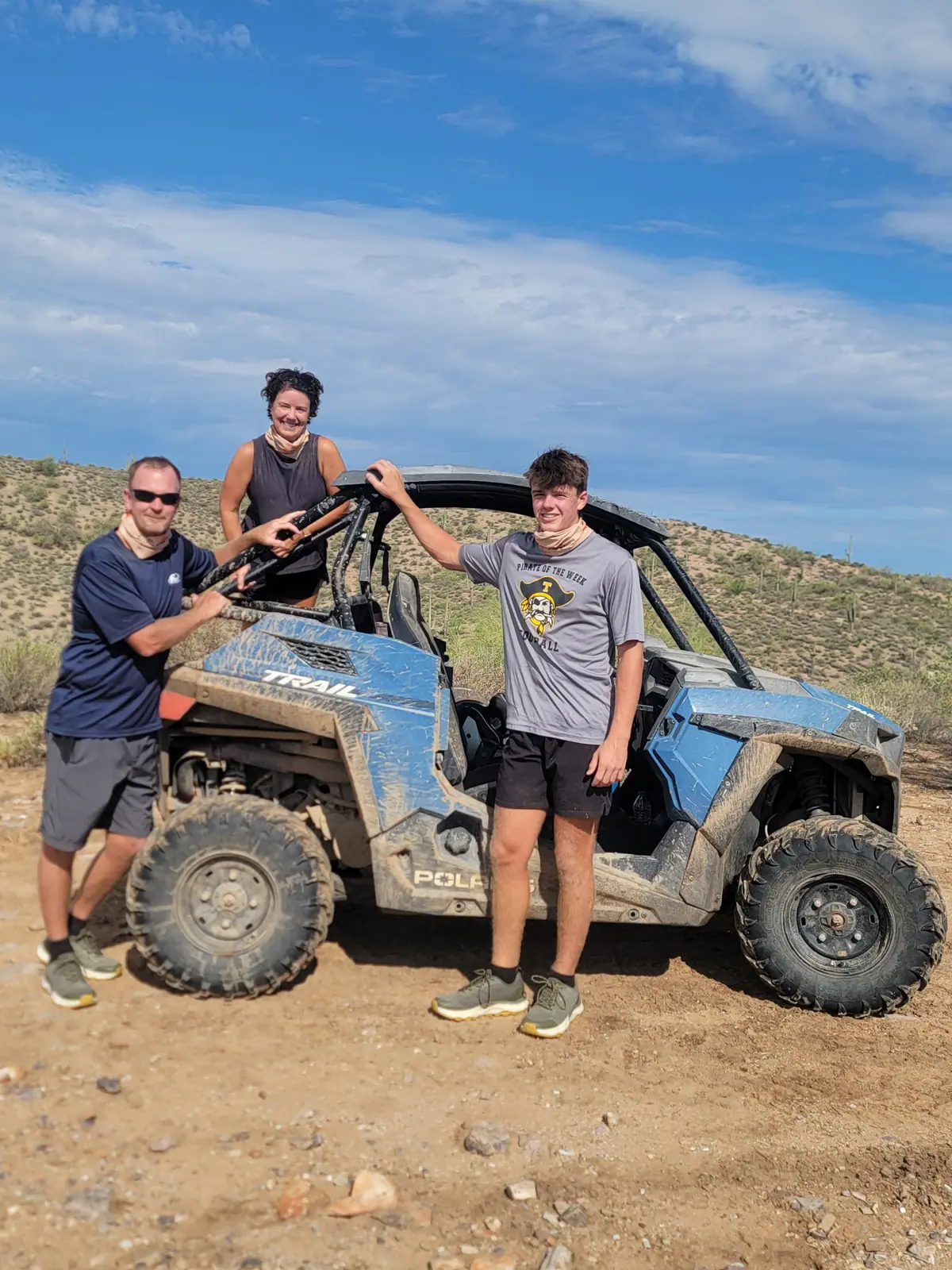
You’ll be driving a 2-seat 800cc side-by-side sand buggy, and the difference from a straddle ATV matters. On a quad you sit on top, balance with your body, and shift your weight through every corner, a skill you’d have to pick up on the day. In a buggy you sit inside a roll cage, belted into a proper seat, and steer with a wheel and pedals. The machine handles the balance, so your attention goes to the trail.
The gear does the rest, and you don’t bring any of it:
- A helmet and goggles
- A neck gaiter for dust and sun
- Bottled water and snacks
- Seatbelts and a roll cage in every buggy
One thing that calms a lot of first-timers: the buggy has two seats. Ride passenger for the first stretch if you like, then swap in at a stop. Any licensed driver can take the wheel.
How Your Guide Runs the Group on the Trail
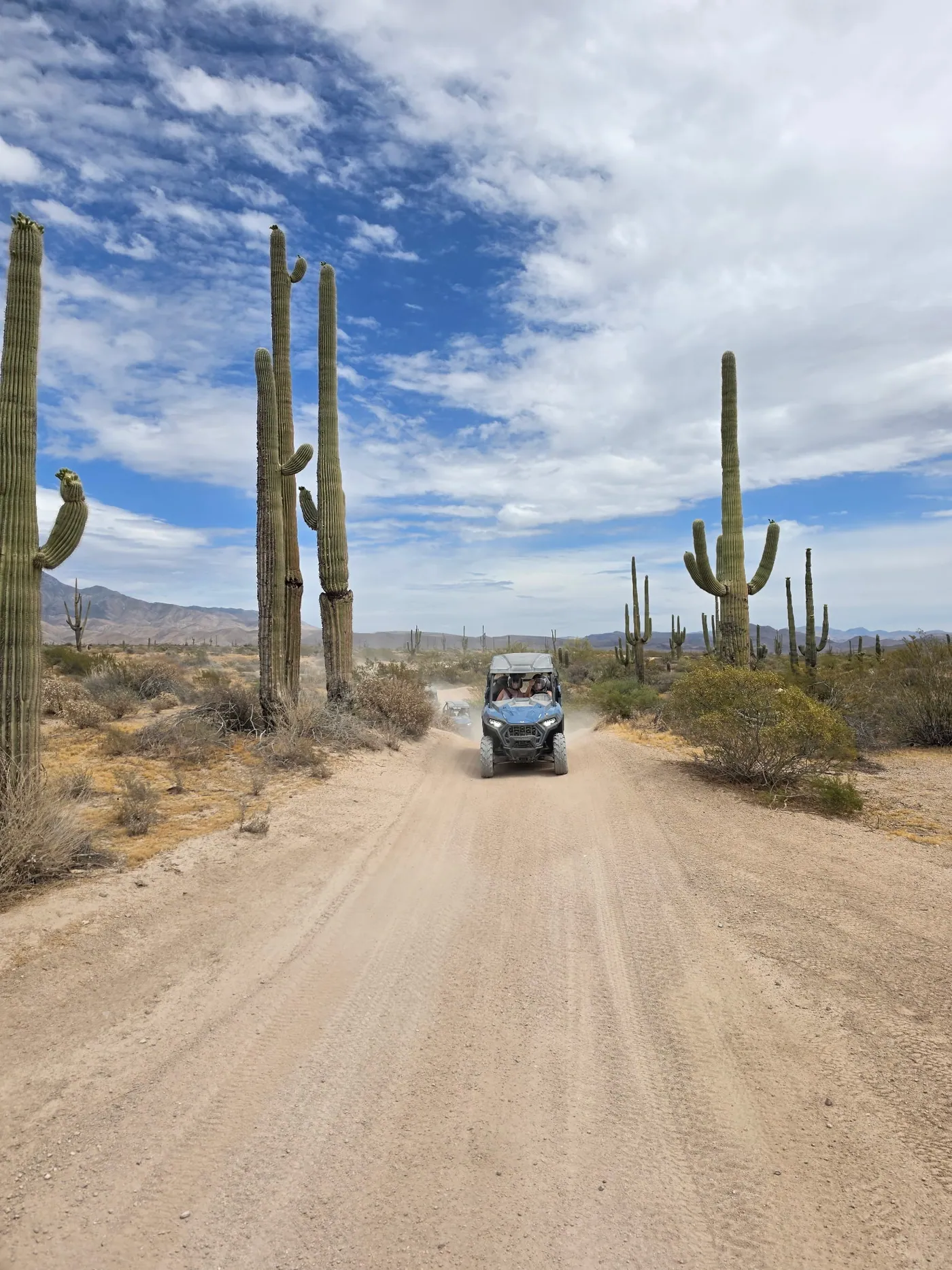
Your guide leads from the front for the whole route, and the convoy runs single file behind. The guide reads each section first, so you only ever drive ground the guide has just driven.
The pace is set to the slowest comfortable driver, not the boldest one. At junctions and trickier sections the line stops and regroups, so you’re never guessing which way to turn.
Regroup stops double as check-ins: the guide checks faces and reminds everyone to drink. On a warm day the guide watches the heat as closely as the terrain and adds a shade stop if anyone is flagging. Photos happen at the good viewpoints, and the guide takes them, so you keep both hands where they belong.
What the First Ten Minutes Feel Like
You roll out of the staging area at walking pace, and the first thing you notice is that the sand feels a little floaty under the tires. That’s normal. Around the second or third bend you touch the brake, feel it bite later than a car’s, and adjust. By the first regroup you’ve figured out the throttle, and by the first viewpoint you’re wondering what you were nervous about.
The guide keeps that opening stretch easy on purpose so your hands have time to learn the machine. The trail gets more interesting once the group has settled in.
Four First-Timer Mistakes, and the Fix for Each
The same four habits show up on nearly every tour.
- Gripping the wheel too tight. Your forearms burn and you overcorrect on every bump. Fix: soften your elbows, hold the wheel like a coffee cup, and let it wiggle a little over rough ground.
- Braking mid-corner. On loose sand, hard braking while turning can push the front wheels wide. Fix: slow down in a straight line before the turn, steer through it, then ease back onto the throttle coming out.
- Following too close. You’re driving blind in the dust with no room to react. Fix: hold the gap your guide set. You’ll catch up at the regroup anyway.
- Skipping water. Sweat dries so fast in desert air that you don’t notice how much you’re losing. Fix: drink at every stop, thirsty or not.
Heat Rules by Season
Sun and hydration matter as much as driving skill, and the rules shift with the calendar.
Summer, which out here means late May into September. Tours run early morning or at sunset to skip the hottest part of the day. Drink before you’re thirsty, starting on the drive out. Wear the neck gaiter, put sunscreen on before you arrive, and keep sunglasses on. Sunset tours also happen to be the pretty ones, with golden hour light on Four Peaks.
Spring and fall. Comfortable, but the midday sun is still strong, so the sunscreen and water rules stand.
Winter. Mornings can be genuinely cold, so bring a layer you can peel off by the first stop.
Year-round: closed-toe shoes, long pants if you have them, and nothing loose that can flap. See what to wear for the full list.
Do You Need Experience or a License?
No experience. Tours are designed for beginners, and most people feel settled within the first few minutes. For self-drive (U-Drive) tours, two rules apply:
- Drivers must be at least 16 with a valid driver’s license, in hand on the day.
- Passengers can ride along from age 8.
So a 15-year-old rides shotgun with a licensed parent driving, and a couple can trade the wheel at a stop. If you can drive a car, you can drive a sand buggy. Our first-timer’s guide walks through the whole day.
Who Should Check With a Doctor First
The ride is bumpy. The belt and seat hold you in place, but you feel every wash and rut through the chassis. If you’re pregnant, recovering from recent surgery, or have a serious back or neck problem, check with your doctor before you book. Unsure? Call and we’ll describe the terrain plainly so you can decide.
A Good Operator vs. a Rental
A rental hands you keys and a map and wishes you luck. A guided tour puts a guide in front of you for every mile. The marks of a good operator:
- Guide-led, start to finish. A CPR-certified guide leads the route rather than pointing you toward it.
- Permitted trails on public land. Desert Dog Offroad Adventures runs on permitted routes in the Tonto National Forest.
- Late-model, maintained machines. Ask what year the fleet is and how often it’s serviced. A good operator answers without blinking.
- A verifiable review record. Desert Dog Offroad Adventures has run tours since 1997 and holds a 4.9-star average across 1,700+ reviews you can read yourself.
Comparing companies? Our guide to choosing the best ATV tour company in Scottsdale covers what to look for.
Ride With Confidence
A guided desert tour is a beginner-friendly way to try off-roading, with a guide in front and the pace set for you. The nerves fade a few minutes in, and what’s left is the fun. Curious how the whole two-plus hours run? See how a guided ATV or UTV tour works.
Have a safety question before you book? Call Desert Dog Offroad Adventures at (480) 837-3966 or check our FAQ, then book your first desert tour when you’re ready. We’ll take care of the rest.